Brazil: 2026 Potato Crop Seen at 4.2 Million Tonnes, Down 8.2%
Key takeaways
- 4.20 million tonnes: IBGE estimate for the 2026 potato crop
- 8.2% less potato than in 2025, when Brazil dug 4.58 Mt
- 19.1% drop in the winter crop, the steepest of 3 seasons
- 9.2% smaller planted area; yields stayed near 34 t/ha
Me ya sa yake da matsala
- Ga manoma
- Compare your 2027 planting plan with the 9.2% cut in national area; lower supply may support prices, so lock in seed early.
- Domin masu sarrafawa
- Plan raw material for a 4.2 Mt national crop; secure contract volumes for the winter window, where supply fell most.
- Ga 'yan kasuwa
- Watch the winter crop, down 19.1%: tighter domestic supply can open room for imports from Argentina and Europe.
- Ga masu kaya
- Adjust seed, fertiliser and machinery forecasts to the smaller planted area and track the next IBGE estimates.
Takaitaccen bayani na daƙiƙa 60
Brazilian growers have chosen to plant fewer potatoes this year, and the national crop will shrink as a result. The August LSPA survey of the statistics agency points to roughly 4.2 million tonnes for 2026, a fall of about 375,000 tonnes on the previous year. Every season contributes to the decline, but the winter harvest now reaching the market loses almost a fifth of its volume. Land is the driver: about 122,000 hectares went into potatoes against roughly 134,000 a year earlier, while output per hectare stayed close to 34 tonnes. For packers, chip plants and fry makers this means a tighter domestic supply through the dry season and possibly more interest in product from Argentina or Europe. Input firms selling seed, fertiliser and harvesters should expect softer demand if the reduced area persists. One caution applies: the survey is revised every month, and the August figure already added a little volume compared with July, so later editions may move the total again.
Brazil will harvest less potato in 2026. The national statistics agency IBGE puts the crop at 4,202,253 tonnes. That is 8.2% below the 4,577,847 tonnes of 2025.
The figure comes from the August edition of the Systematic Survey of Agricultural Production (LSPA). IBGE published the survey in September.
All three seasons are smaller
Brazil grows potatoes in three seasons. IBGE sees a decline in each of them:
Kwanakin mako. Cire rajista da dannawa ɗaya.
- First (summer) crop: 1,933,688 t, down 0.7%.
- Second crop: 1,374,803 t, down 9.9%.
- Third (winter) crop: 893,762 t, down 19.1%.
The August estimate is slightly higher than the July one. The agency added about 3,155 tonnes in total. The second crop gained 1,600 t and the winter crop 1,555 t. The first crop did not change.
Less area, not lower yields
Planted area explains most of the fall. Growers planted 122,091 ha in 2026, according to IBGE data in the SIDRA database. In 2025 they planted 134,471 ha. That is a drop of 9.2%.
The winter crop lost the most area. It shrank from 29,091 ha to 22,202 ha, or 23.7%. Second-crop area fell 10.6%. First-crop area fell only 1.1%.
Average yields did not fall. Our calculation from IBGE data gives about 34.5 t/ha in 2026. The 2025 level was about 34.0 t/ha.
The weather still hurt some regions. In August, the Pensar Agro news service cited Cepea data for Vargem Grande do Sul in São Paulo state. Rain in May and June cut July yields there to about 30 t/ha.
Me ya sa yake da matsala
Brazil is the largest potato producer in South America. A crop 375,000 tonnes smaller changes the supply balance for fresh markets and processors. It also shapes import demand from Argentina and Europe.
The data show that growers chose to plant less. This points to economic reasons, not only to weather. Seed, fertiliser and machinery suppliers may see weaker demand if the trend continues in the next planting cycle.
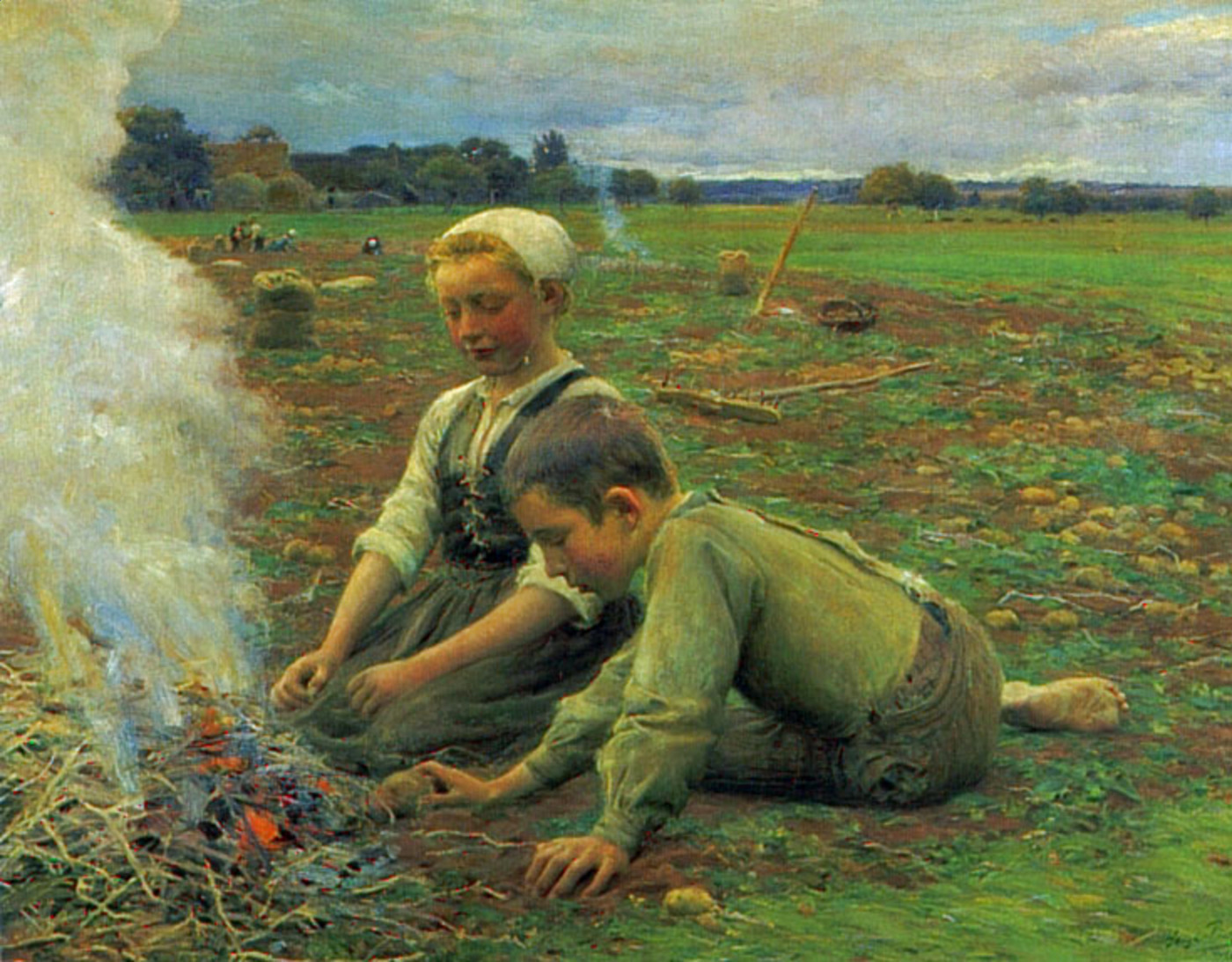
Photo: Potatoes, a painting by José Júlio de Souza Pinto (illustrative). José Júlio de Sousa Pinto / Wikimedia Commons, yankin jama'a
Takaitaccen Bayani Kan Dankali na Duniya
Manyan labarai guda biyar, farashi, faɗakarwa game da cututtuka da abubuwan da suka faru. Safiya na ranakun mako, babu talla.
Abin da na gaba
The LSPA survey is updated every month, so the September edition will revise the figures again. The winter harvest in São Paulo and Minas Gerais is still under way. The next planting decisions will show whether growers keep area low.
Sources
- IBGE - LSPA agosto 2026, Indicadores (PDF) - https://ftp.ibge.gov.br/Producao_Agricola/Levantamento_Sistematico_da_Producao_Agricola_mensal/Fasciculo_Indicadores_IBGE/2026/estProdAgri_202608.pdf
- IBGE SIDRA — tabela 6588 (área plantada, área colhida, produção) — https://apisidra.ibge.gov.br/values/t/6588/n1/all/v/all/p/202512,202608/c48/all
- Panorama MT / Pensar Agro — Batata: safra de inverno amplia oferta (14.08.2026) — https://panoramamt.com.br/agronegocio/batata-safra-de-inverno-amplia-oferta-e-coloca-precos-em-alerta/
An haɗa shi a cikin wannan kayan
- Kasa
- Brazil
- sections
- AmericagirbiLabarai- HUASHIL
Labarai masu alaƙa
Colombia: Farashin Dankali a Medellín ya haura zuwa Pesos 3,500 a kowace kg Daga 2,000 yayin da ake rage wadatar da ake samu daga bushewar yanayi
Peru: Yawan Dankali da ake fitarwa ya ninka zuwa tan miliyan 6.58 tun daga shekarar 2000 yayin da yawan amfanin gona ya kai t19.5 a kowace ha